
 English
 简体中文
简体中文  繁体中文
繁体中文 
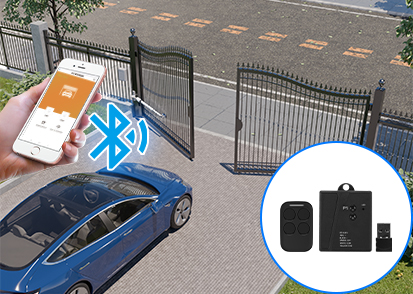


Why Is Your Sliding Gate Opener Making Excessive Noise?
Why Is Your Sliding Gate Opener Making Excessive Noise?
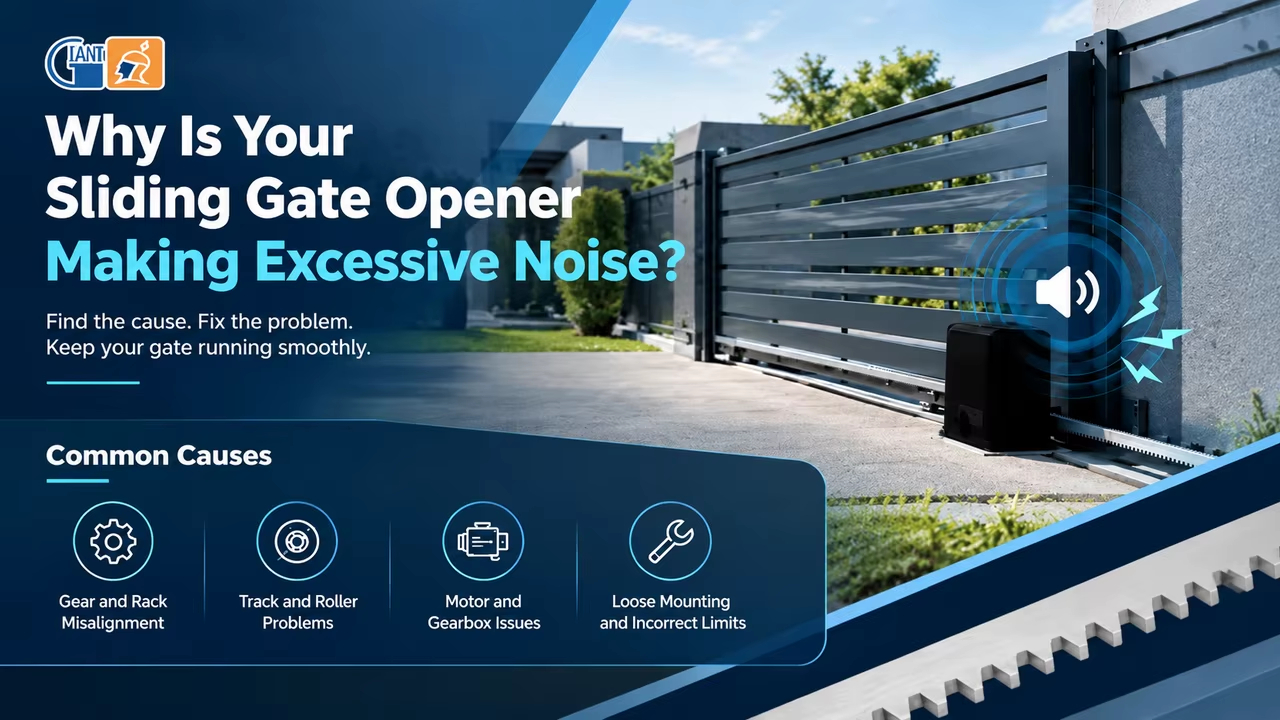
A sliding gate opener may operate smoothly after installation but become noisier over time. Common symptoms include clicking during startup, grinding while the gate moves, or humming from the motor housing.
These sounds may indicate misalignment, worn components, loose fasteners, or internal mechanical issues. Identifying the cause early helps installers reduce downtime and improve the reliability of an automatic sliding gate opener.
1. Common Causes of Sliding Gate Opener Noise
Gear and Rack Misalignment
Incorrect gear engagement, uneven rack installation, loose fasteners, or damaged gear teeth can cause grinding and knocking. Debris trapped between the teeth may also produce scraping sounds. Incorrect lubrication, where lubrication is required, can increase friction and wear.
Track and Roller Problems
Worn rollers, damaged bearings, a misaligned track, or accumulated debris can create persistent rolling and grinding noises. Worn guide rollers may cause the gate to sway, affecting gear engagement.
Motor and Gearbox Issues
If noise comes from inside the sliding gate motor, worn bearings, damaged gearbox components, or insufficient or degraded lubricant, where applicable, may be responsible.
Loose Mounting and Incorrect Limits
Loose mounting bolts, an unstable foundation, or incorrectly adjusted travel limits can increase vibration or cause the gate to strike its stops.
2. How to Troubleshoot a Noisy Sliding Gate Opener
Before inspection, disconnect the power and follow the manufacturer's safety instructions.
Check gate movement: Disengage the motor according to the manual and move the gate by hand to identify resistance.
Inspect the rack and track: Remove debris and check alignment, fasteners, and gear engagement.
Examine rollers: Look for wear, damaged bearings, or restricted movement.
Locate the noise: Noise during gate travel may indicate track, roller, or rack issues; noise inside the motor may require professional inspection.
Check mounting and lubrication: Tighten loose hardware and use manufacturer-approved lubricant only where required.
If abnormal noise persists, arrange a qualified technical inspection.
3. Choosing a Reliable Sliding Gate Opener
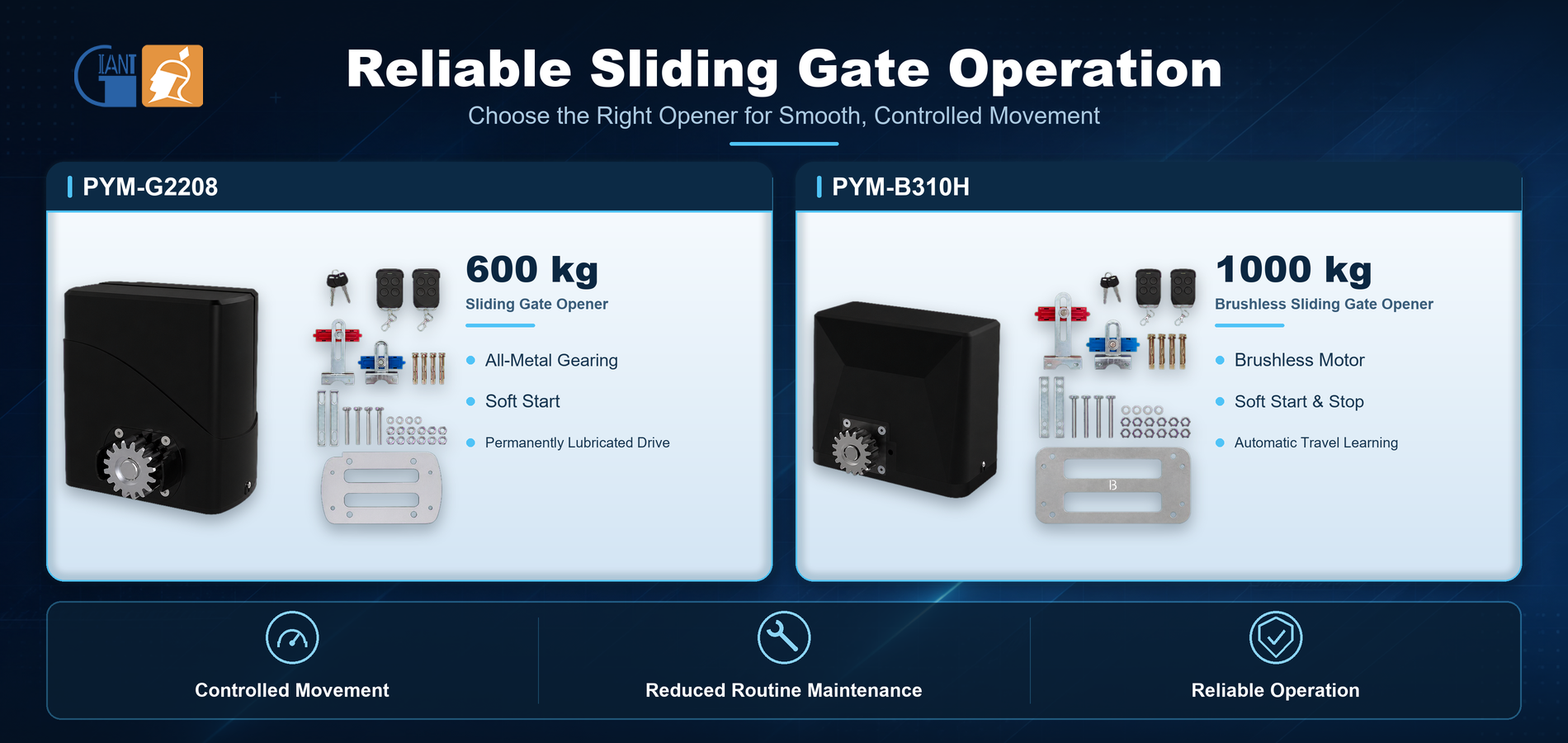
Correct installation and suitable product selection both contribute to quieter operation and lower maintenance demands.
PYM-G2208: 600 kg Sliding Gate Opener
The JUJIANG GIANT PYM-G2208 features all-metal gearing, an integrated control board, soft start, overcurrent protection, automatic closing, and pedestrian mode. Its specified maximum gate weight is 600 kg, with 950 N maximum thrust and a speed of 20 cm/s.Its permanently lubricated drive design helps reduce routine lubrication requirements.
PYM-B310H: 1000 kg Brushless Sliding Gate Opener
Designed for heavier gates and more frequent operation, the PYM-B310H uses a brushless motor with a 310 V DC supply and 300 W rated power. It supports gates up to 1000 kg, with 800 N specified thrust and a speed of 20 m/min.
All-metal gearing, soft start and stop, and automatic travel learning support controlled movement and easier commissioning. Depending on configuration, features include limit-switch options, Hall sensors, photocell connections, and Wi-Fi/Bluetooth app control.
Conclusion
Excessive noise from a sliding gate opener often signals problems with alignment, rollers, mounting, or internal components. Regular inspection and correct installation help prevent unnecessary wear. Choosing a suitably rated automatic sliding gate opener can support reliable operation across residential, commercial, and industrial applications.
 37 Sunshine Road, Photoelectric Information Industrial Park, Nan'an, Fujian, China
© Copyright: 2022 Giant Alarm System Co.,Ltd All Rights Reserved.

IPv6 network supported


