
 English
 简体中文
 繁体中文


DIY Aluminum Gates vs. Ready-Made Gates: Key Differences
DIY Aluminum Gates vs. Ready-Made Gates: Key Differences
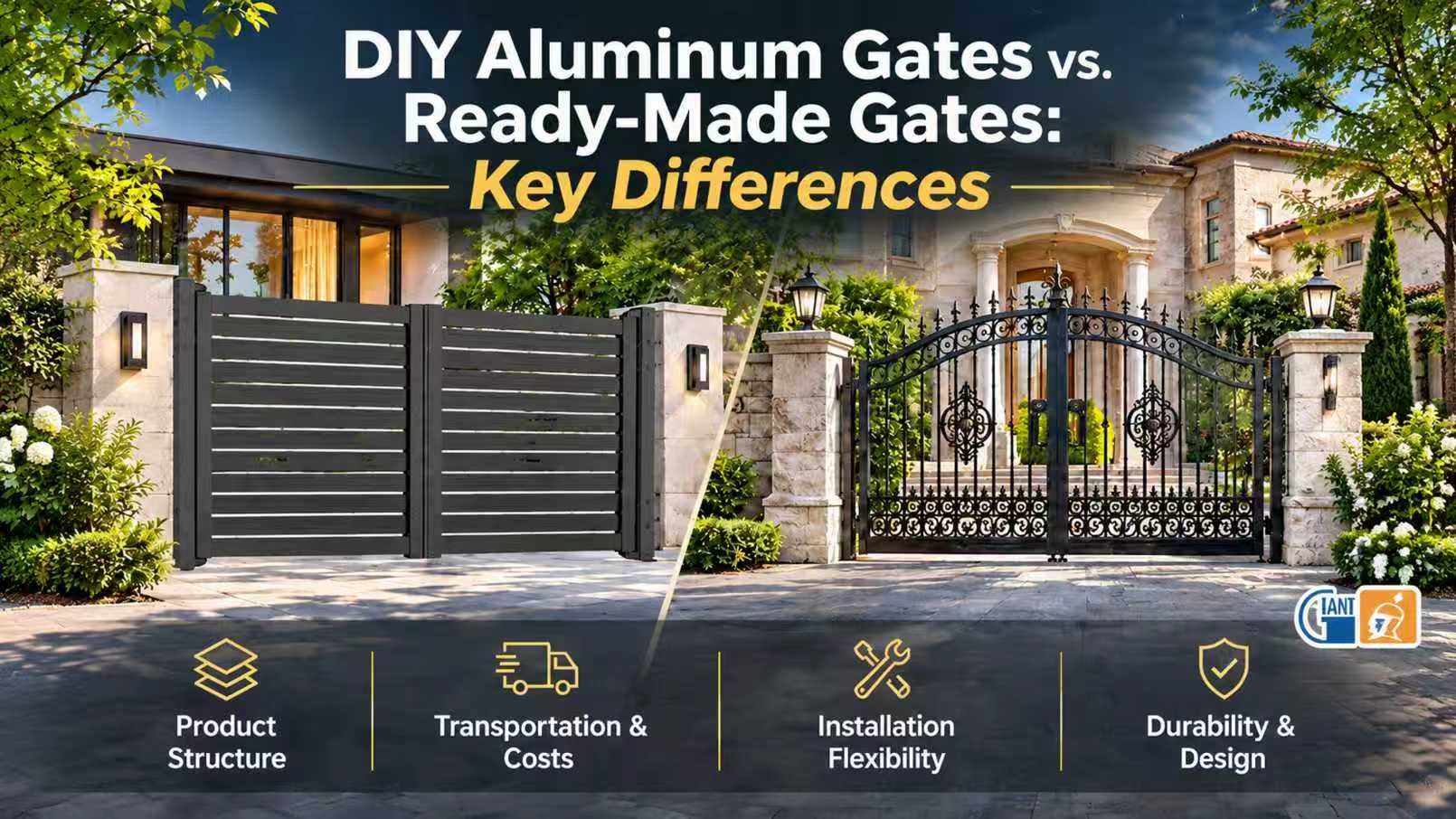
When sourcing residential gates, importers, distributors, and installers often choose between ready-made gates and DIY aluminum gates. While pre-assembled gates offer a finished product, their bulky packaging increases shipping and storage requirements. Modular aluminum gate kits, however, are shipped in components and assembled on-site, offering greater flexibility and transportation efficiency.
1. Product Structure: Modular vs. Pre-Assembled
Traditional ready-made gates are manufactured as complete units. Wrought iron gates are typically welded, while cast aluminum gates use molds for decorative designs. Their advantage lies in their finished appearance and minimal on-site assembly.
A DIY aluminum gate kit consists of pre-engineered frames, horizontal rails, vertical pickets, and connectors. Components are joined using bolts and fasteners, allowing on-site assembly and easier component replacement.
2. Transportation and Overall Costs
Fully assembled gates require more packaging space and can be difficult to handle and store, particularly for bulk imports.
Modular aluminum gate systems use component-based packaging to improve container loading and warehouse efficiency. Their lightweight structure also simplifies handling.
Ready-made gates may involve additional costs for specialized installation, handling, and international freight. Wrought iron also requires periodic rust prevention, while customized cast aluminum designs can have higher initial costs. Actual savings with DIY kits depend on shipping, labor, and project requirements.
3. Installation and On-Site Flexibility
Heavy pre-assembled gates may require additional labor, suitable mounting structures, and lifting equipment.
By comparison, DIY aluminum gate assembly uses lightweight profiles and prepared connection points. Many kits can be assembled with standard tools without on-site welding or heavy lifting, depending on gate dimensions and installation conditions.
This makes easy-to-assemble aluminum gates a practical option for standardized local installation processes.
4. Durability and Design Options
Aluminum offers a favorable strength-to-weight balance, reducing loads on hinges and supporting structures. Its natural oxide layer also provides corrosion resistance, reducing the need for frequent rust-prevention maintenance.
Ready-made gates offer advantages in intricate decorative designs. Meanwhile, customizable DIY aluminum gates provide flexibility in dimensions, picket spacing, colors, and configurations. Horizontal and vertical slat designs complement many contemporary residential properties.
5. Why Choose JUJIANG GIANT DIY Aluminum Gates?
JUJIANG GIANT provides modular DIY Aluminum Gate solutions for distributors and installers, combining flexible configurations with coordinated gate automation.

Modular Assembly: Pre-engineered frames, rails, pickets, and connectors simplify installation.
Flexible Sizing: Configurations accommodate driveway, garden, and pedestrian gates.
Efficient Shipping: Component-based packaging optimizes container loading and storage.
Multiple Gate Styles: Sliding gates, swing gates, and pedestrian gates are available in modern and classic designs.
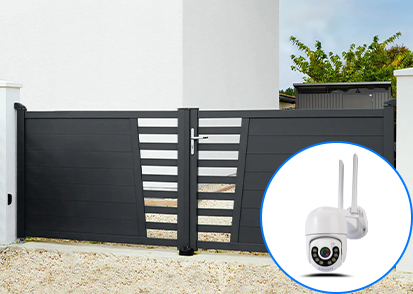
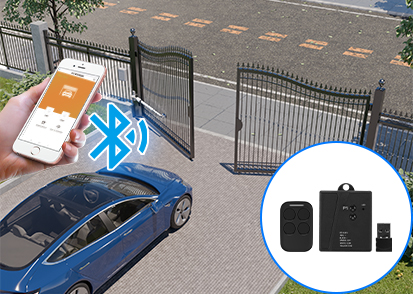
Integrated Automation: Matching gate openers, remotes, and safety accessories support complete automatic gate projects.
With established gate and window automation experience, export capabilities, and integrated manufacturing, JUJIANG GIANT offers coordinated supply solutions for residential gate projects.
Conclusion
The choice between a DIY aluminum gate and a ready-made gate depends on project priorities. Ready-made gates suit projects requiring a fully finished product, while modular aluminum gate kits offer advantages in shipping efficiency, installation flexibility, and sourcing.
JUJIANG GIANT combines modular gate construction with compatible automation solutions, supporting flexible sourcing and efficient project delivery.
 37 Sunshine Road, Photoelectric Information Industrial Park, Nan'an, Fujian, China
© Copyright: 2022 Giant Alarm System Co.,Ltd All Rights Reserved.

IPv6 network supported


